

You can outwork your competitors and still lose every quarter.
Hiring sharper, shipping faster, running tighter won’t change the position you’re competing from. The buyers arriving at your door are oriented to a different problem than the one your product solves. They use your competitor’s vocabulary. They compare you on criteria designed for another product. They measure success against a definition someone else published. Half the call is spent unteaching a story you didn’t write.
The customers who actually buy stay satisfied but never quite advocate, because the fit was always slightly off.
They share a single mechanism: the customers found you through someone else’s frame, and they brought that frame with them. All of it was set before they walked through your door.
The wrong customer is a right customer trained by the wrong frame.
Whoever names the problem sorts the customers
Naming the problem is how you sort the customers before they ever reach your door.
Whoever names the problem decides which vocabulary buyers use to describe what they need, which criteria they evaluate solutions against, and which definition of “solved” they’re measuring. Each of those decisions points buyers at one company instead of another. The customers each company attracts are the customers each company’s frame trained.
Most companies don’t build their own frame because the work doesn’t look like work. There’s no quarterly target for “introduced new vocabulary into the market.” No KPI for “shifted what buyers compare.” No dashboard for “rewrote what success means.” The work that decides which customers find you in five years produces nothing measurable in its first six months.
So companies do the visible work instead. Build the product. Run the campaigns. Hit the targets. All of it inside a frame someone else already wrote, against criteria someone else already chose. The visible work moves the dashboard. The invisible work decides whose customers walk through the door.
You don’t fight for position inside someone else’s frame. You build your own. The companies that get the right customers built theirs early, before they had a product worth defending.
Whoever names the problem owns the solution
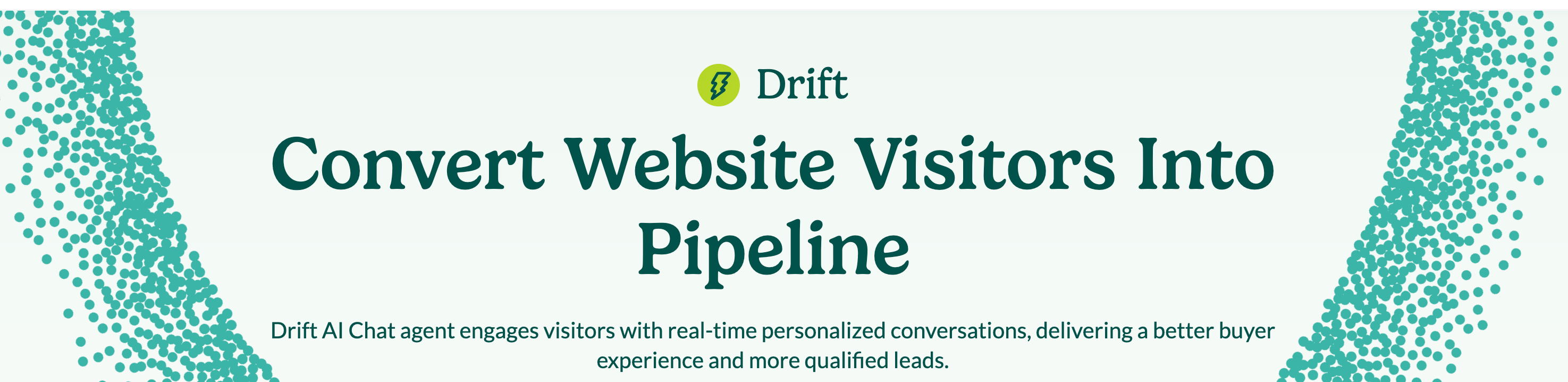
Drift won by naming a different problem buyers were facing.
David Cancel and Elias Torres looked at the lead-generation model and saw what it produced: form fills, scoring, nurture sequences, workflows built for a buyer who would wait. There was no place in that model for someone who wanted to talk now.
Their move was simple: “The buyer is live on your site, ready to talk.”
Drift ran the Hypergrowth conference, where the vocabulary got reinforced. They published Conversational Marketing and This Won’t Scale, books that argued the position in public. Their content taught buyers what to ask, what to compare, and what outcome to expect.
By the time competitors reacted, buyers had started reaching for Drift’s words.
Intercom, Marketo, HubSpot: none of them were the benchmark anymore because the question had changed. HubSpot launched Conversations in 2018, adding chat and bot features in response to a category they didn’t create. That’s what chasing demand looks like: you build something real, you win for a while, and then you spend years answering a question someone else asked first.
When you don’t own the frame, the customer mix you attract starts pulling product decisions toward a category logic you didn’t choose. Intercom didn’t lose because they shipped less. They lost because the customers they were listening to had started using Drift’s vocabulary, and the roadmap followed the vocabulary.
Same market. Different customer bases. Sorted by which frame each buyer absorbed first.
The From–To test: are you attracting your customers or your competitor’s?
Your From–To tells you whether you’re attracting your customers or your competitor’s.
The From is the underlying condition causing the problems they’re leaving behind. The To is the specific shift when the problem is solved: what they can do, decide, or stop doing that they couldn’t before.
Pause here. Write down your current From–To. One sentence each. Not the marketing copy. The actual words you’d use to a friend at dinner. Now say it to someone using your competitor. Watch what their face does in the first three seconds.
An instant “Yep, that’s the problem” means you’re repeating language they already had. That language came from somewhere.
If they pause, ask you to repeat it, then slowly agree, you may be naming something they felt but couldn’t say. That’s what ownership starts to feel like.
You’ll see it most clearly in how buyers describe their own situation. If they keep using your competitor’s words, you’re inside their frame. If they start using your words without being prompted, in conversations with peers and in how they sell the idea internally, you’re training the market.
If they could say it before they found you, you don’t own it.
Your From–To is the sorting mechanism
Either you write your From–To, or your competitor writes it for you.
Your From–To decides what buyers notice, what they compare, what they expect, and what they repeat after they buy. It shows up before it’s real: in the words you use on sales calls, the questions your content trains buyers to ask, the criteria your case studies highlight, the success metric you anchor against.
Every surface where a buyer encounters your company teaches them the vocabulary they’ll use to evaluate you.
Start with the customer’s starting point. Not the surface frustration, the condition underneath it. Name it specifically, in language that makes the previous definition feel incomplete.
Then name the destination with equal precision. What can they do, decide, or stop doing that they couldn’t before? What changes in how they operate when the problem is solved?
Write those two points down. Read them back. Ask: could a competitor say this?
If yes, you’re renting demand someone else owns.
If no, you have a starting point for a problem you own.