

Have you ever chased something new, when what you had was already perfect for you?
Imagine you have an espresso machine that makes perfect coffee every morning.
You’ve used it for thirteen years. It knows exactly how you like it—the right temperature and taste you can’t get anywhere else. Your morning ritual is effortless. Press one button, and two minutes later you have your coffee.
Then you see the ads.
A new machine—sleek, smart, promises “the coffee of the future.”

The marketing promises to change everything about how you make coffee. The next generation of your morning ritual.
So you buy it.
Expensive. Takes up your counter space. Requires an hour of setup, syncing it to your phone, creating an account, calibrating preferences.
After a week, it breaks.
Won’t hold calibration. The app crashes. You can’t get it to make the same coffee twice. Some mornings it won’t brew at all.
Now you’re borrowing your neighbor’s industrial espresso machine—the one they use for their business, not built for home use at all.
The coffee doesn’t taste as good as what you were getting before. And you’re spending more time troubleshooting than drinking.
Meanwhile, your original espresso machine—the one that made perfect coffee for thirteen years—sits in the cabinet.
You could have just upgraded it. Added those smart features you actually wanted. Tuned it to make even better coffee specifically for your taste. Instead, you’re paying your neighbor for worse results while your perfect machine collects dust.
And here’s the part that really stings: you’re now paying more every month than it would have cost to upgrade the original machine. Not just once—every single month, forever, for coffee that will never taste as good as what you already had.
This is Apple with Siri, Apple Intelligence, and Google. Except the monthly payment isn’t your coffee budget.
It’s $1 billion a year.
Apple Already Had What Everyone Else Was Building
Not a chatbot. Not a voice assistant that answered questions.
A connector—woven into devices people already trusted, processing locally, getting smarter with every interaction across every device.
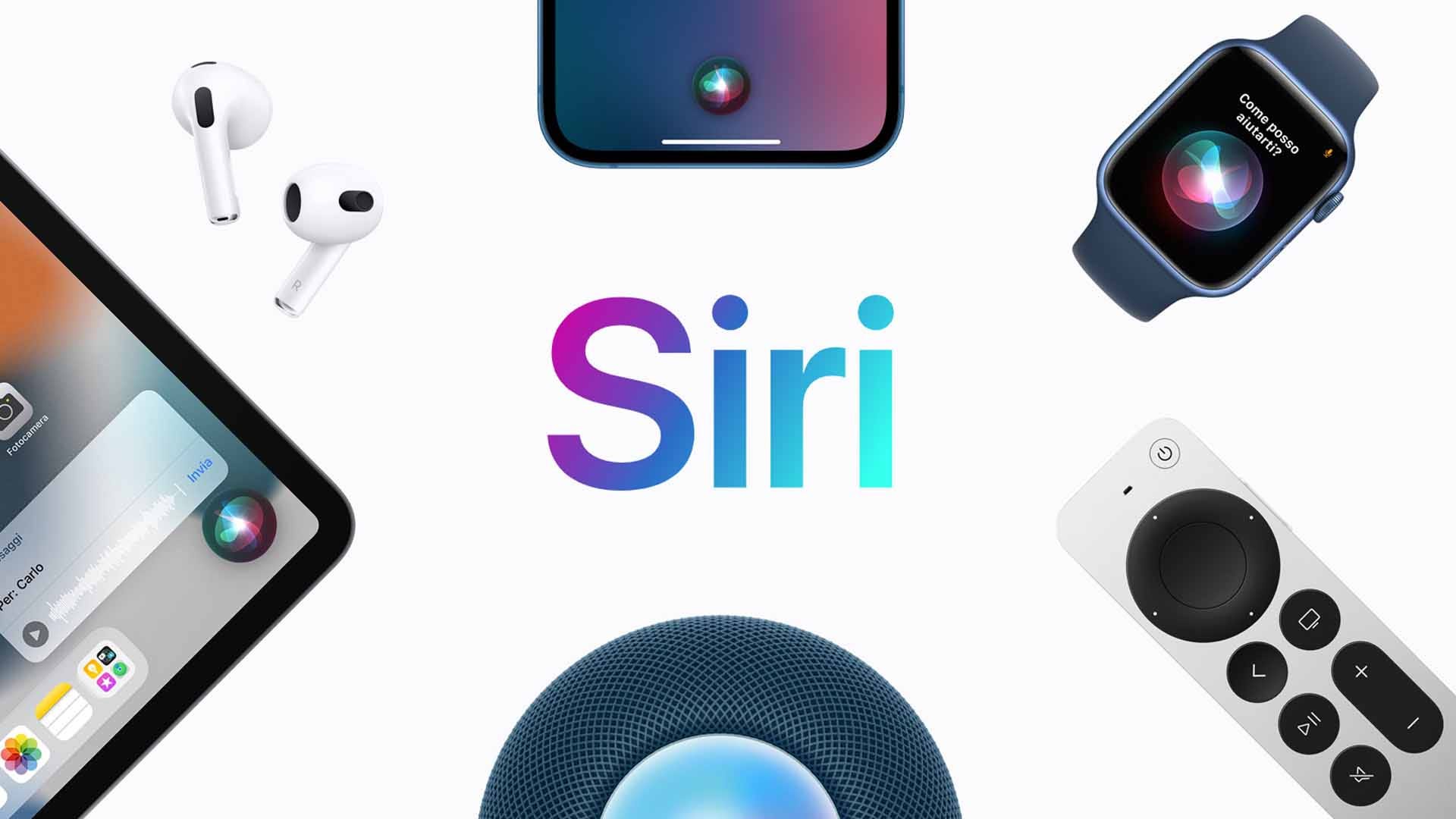
Apple had spent thirteen years building what OpenAI, Google, and Amazon were frantically trying to create: AI that people actually used, actually trusted, actually integrated into their daily lives.
Siri wasn’t on top of the iPhone. It was at the core.
Every “Send a message” command in 2011 triggered a network Apple had already woven through iOS, iMessage, and Contacts. By 2024, it touched every layer.
Ask Siri something on your iPhone while cooking, pick up the thread on your Mac when you sit down to work, finish it on your iPad before bed. The conversation followed you. Not because Apple built clever sync technology—though they did—but because Siri wasn’t separate from the ecosystem. It was the voice interface for the entire thing.
Every device you added made it more valuable. Your Watch knew your fitness patterns. Your HomePod knew your home routines. Your iPhone knew your communication habits. Your Mac knew your work patterns. Siri connected all of it.
Thirteen years of users learning they could ask anything without fear their voice would become a product. Billions of interactions reinforcing that trust.
Every privacy scandal at Google or Amazon made Siri stickier. Every headline about AI training data made Apple’s on-device processing more valuable. Every “Hey Siri” interaction reinforced a behavior pattern competitors couldn’t replicate without starting over—and giving up the business model that funded their AI development.
This was the machine Apple had built.
Not flashy. Not headline-bait. But integrated into two billion devices, trusted by hundreds of millions—and structurally impossible to copy without abandoning the very model that made competitors’ AI possible.
While Competitors Scrambled, Apple Owned the Future
Apple owned the most valuable interface in computing.
OpenAI rushed to add voice to ChatGPT—trying to become what Apple already was.

Google paid Apple $20 billion a year to stay the default search engine—a tacit admission that Apple controlled the interface everyone needed.
Amazon’s Alexa was everywhere but integrated nowhere—a voice in a box, not a voice in your life.
They were all chasing the same goal: an AI people trusted, used daily, and invited into their private routines.
Apple already had it. But Apple’s real advantage wasn’t the product. It was time.
Competitors couldn’t copy thirteen years of habit loops, data discipline, and behavioral lock-in to an ecosystem.
Google couldn’t pivot to privacy; its entire business ran on data extraction. Asking Google to build private AI was like asking an oil company to champion solar power.
Amazon couldn’t weave Alexa through devices it didn’t control. Speakers aren’t ecosystems. Presence isn’t position.
OpenAI couldn’t build hardware or operating systems. They had the foundation model. Apple had the foundation of daily life.
The pattern was clear: each rival strong in one dimension, fatally weak in another.
OpenAI had intelligence but no integration.
Google had reach but no trust.
Amazon had presence but no coherence.
Apple had all three—and moats around each. This wasn’t a race. It was already over.
While others scrambled to assemble the pieces, Apple could have done the only thing that mattered: make the machine better at what it already did perfectly.
Instead, it watched at ChatGPT’s launch—and blinked first.
The Decision Cascade That Changed Everything
What happened next wasn’t a single mistake—it was a coordination cascade that corrupted every layer of the company’s strategic system.
You can trace it through five elements of Strategy Flywheel™: who gets mobilized, what gets measured, how resources flow, what gets protected, and where you end up.
Apple’s cascade is textbook. Each decision looked defensible in isolation. Together, they migrated the company from Prime Mover to panic in eighteen months.
This is the anatomy of a $2 billion strategic error.
Apple’s cascade started with a single frame: “We’re behind in AI.”
That frame looked reasonable. ChatGPT launched, the market panicked, Apple responded. But it was someone else’s question—and it corrupted every downstream decision.
The real question was never “How do we catch up in AI?” It was “How do we defend our ecosystem when AI becomes table stakes?”
One frame chases. One frame compounds. Apple chose chase.
What frame is driving your current strategic move?
Prompt 1: The Frame Audit
You are a strategist who helps companies recognize when the question driving their strategy isn't their own. You've seen how a single borrowed frame — usually triggered by a competitor's launch, a market narrative, or a board-level anxiety — can redirect an entire organization away from the advantage it already holds. Your job is to help people see the frame before it cascades.

You're speaking with someone who just read about how Apple's entire $2 billion strategic error started with one frame: "We're behind in AI." That frame looked reasonable — ChatGPT launched, the market panicked, Apple responded. But the real question was never "How do we catch up in AI?" It was "How do we defend our ecosystem when AI becomes table stakes?" The borrowed frame made Apple abandon thirteen years of earned trust, ecosystem integration, and privacy-first positioning to chase someone else's scorecard.

Now help them audit the frame driving their own strategy.

---

YOUR TASK

Ask:

"Think about the most significant strategic decision you're currently making — or one you've recently made. The one that's absorbing the most energy, budget, or leadership attention.

Two questions:

1. What's the question driving that decision? Not the official strategy language — the actual question your team is trying to answer. 'How do we catch up to [competitor]?' is a different frame than 'How do we deepen what we already own?' Both could lead to the same initiative, but they produce very different downstream choices.

2. Now think about what triggered that question. Was it something a competitor did? A market narrative? A board conversation? An analyst report? Pressure from a specific event? Or did it emerge from looking at your own strengths and asking where they compound next?"

Once the user responds, do the following:

1. Name the frame in one sentence — the core question that's organizing their strategic energy right now.

2. Identify the trigger in one sentence — what event, competitor move, or external pressure prompted this frame.

3. Assess frame ownership: is this question one that emerged from their own strategic position, or was it prompted by someone else's move? State it in one sentence without judgment — both can be valid, but they produce different cascades.

4. Then reflect back the gap: if the frame is borrowed, name in one sentence what advantage they already hold that this frame might be obscuring. If the frame is owned, name in one sentence what it's protecting or deepening.

5. Test the frame with one question:
   "If the competitor or event that triggered this question had never happened, would you still be making this strategic move? If yes, the frame is yours. If no, you're playing someone else's game — and the cascade has already started."

Close with:
"The frame is where the cascade begins. Apple's wasn't 'build AI' — every company was doing that. It was 'we're behind' — and that frame turned every downstream decision into a reaction instead of an extension. The question isn't whether your frame leads to good work. It's whether it leads to your work."

Do not suggest a better frame. Do not evaluate the strategy. Just help them see the frame and where it came from.
They Mobilized Everyone—Around the Wrong War
WWDC 2024: Apple unveils “Apple Intelligence” with the tagline “AI for the rest of us.”

Development teams build it as distinct from Siri. Marketing teams create new category education. Product teams explain how this is different from what customers already have.
The $1 billion ad campaign mobilized the market around a question no one was asking:
“Is this Siri?”
“Which one should I use?”
The answer was already in their hands. Deepen Siri. Make “Hey Siri” even more valuable. Remind customers of thirteen years of trust.
Instead, they mobilized everyone—internal teams, external customers, media—around borrowed positioning. Chasing OpenAI’s scorecard, not defending their own territory.
The Market Said No. Loudly.
Apple Intelligence gets a vote of two thumbs down.
Features advertised in summer 2024 as “available now” weren’t ready. Upgraded Siri only worked properly two-thirds of the time in internal testing—nowhere near ready for release.
Regulators forced Apple to pull TV ads for iPhone 16 capabilities that didn’t exist.
Apple tests OpenAI, Anthropic, Google—who can fill the gap?
November 2025, Apple chooses Google.
Not because Gemini was the best model (Anthropic’s Claude was superior), but because Google offered the best price. Emergency procurement, not strategic planning.
The deal: $1 billion annually for a custom 1.2 trillion parameter Gemini model—eight times more powerful than Apple’s own 150 billion parameter system.
The market didn’t validate Apple Intelligence. It exposed that Apple Intelligence didn’t exist.
Watch What Happens When the Wrong Problem Corrupts Everything
The wrong problem definition cascaded through every resource allocation process.
Development: Engineering cycles creating separation instead of integration.
Architecture decisions supporting new positioning instead of existing advantage. Development roadmap chasing feature parity instead of ecosystem deepening.
CEO Tim Cook loses confidence in AI chief John Giannandrea’s ability to deliver. And in March, Apple officially delays personalized Siri features indefinitely.
Marketing: $1 billion creating confusion about something customers already trusted.
“Apple Intelligence” replacing thirteen years of “Siri” equity. Customer education burden replacing relationship reminder.
Ads pulled. Lawsuits filed. The campaign that was supposed to establish AI leadership instead established coordination theater.
Partnerships: April 2025: Apple announces Apple Intelligence coming to Vision Pro—the same month Siri delays are announced.
Vision Pro needs AI, Siri isn’t ready, so announce the feature before you have the capability.
Apple will now pay $1 billion annually for AI capability they should already own, kept invisible because promoting it undermines the entire “Apple Intelligence” positioning.
Every system followed the same borrowed frame into the same borrowed conclusions.
This is how a frame becomes a cascade. Not through one bad decision—through a thousand aligned ones, each looking reasonable in isolation, each pulling further from the advantage that made them strong.
Where is your frame showing up?
Prompt 2: The Case Tracer
You are a strategist who helps companies see how a single strategic frame propagates through an organization — showing up in who gets mobilized, what gets measured, how resources flow, and what gets protected. You've seen how decisions that look independent are often expressions of the same upstream frame. Your job is to help people trace the connections before the cascade locks in.

You're speaking with someone who just read about how Apple's "we're behind in AI" frame cascaded through every system:
- People: Teams mobilized around "Apple Intelligence" as a separate brand — creating confusion instead of deepening Siri
- Performance: Marketing spent $1 billion measuring perception of innovation leadership instead of ecosystem trust
- Process: Engineering built separation (new product) instead of integration (existing advantage). The executive who created Vision Pro was pulled off to rescue Siri.
- Prioritization: Apple protected its image of AI leadership instead of protecting thirteen years of earned positioning
- The result: $1 billion annually to Google for capability Apple once owned

Every decision looked defensible in isolation. Together, they migrated Apple from Prime Mover to dependency in eighteen months.

Now help the reader trace where their own frame is cascading.

---

YOUR TASK

Ask:

"Think about the strategic frame you identified — the question that's organizing your energy right now. Now look at how it's showing up across your organization.

Three questions:

1. Who got mobilized because of this frame, and around what? When the strategic direction was set, which teams shifted their focus, hired new roles, or reorganized? Are they building on what you already own — or building something separate from it? Apple didn't just pursue AI; they created 'Apple Intelligence' as distinct from Siri, forcing every team to learn a new language and create separation instead of synergy.

2. What are you measuring that you weren't measuring before this frame took hold? New dashboards, new KPIs, new success metrics — these are fingerprints of the frame. Are those metrics tracking progress on your owned advantage, or are they tracking how you compare to the competitor who triggered the frame? Apple measured perception of innovation leadership instead of ecosystem trust and Siri adoption depth.

3. Where are resources flowing that they wouldn't have flowed without this frame? Budget, engineering cycles, leadership attention, executive time — follow the resource trail. Is it deepening something you've built, or building something new because the old thing felt insufficient? Apple spent development cycles creating separation between Apple Intelligence and Siri, marketing dollars educating customers on a distinction they didn't need, and eventually $1 billion annually buying back capability from a competitor."

Once the user responds, do the following:

1. Name the people cascade in one sentence — who got mobilized and whether they're extending owned ground or building borrowed ground.

2. Name the measurement cascade in one sentence — what's being tracked and whether it measures your advantage or your gap relative to a competitor.

3. Name the resource cascade in one sentence — where investment is flowing and whether it deepens what exists or creates something parallel to it.

4. Reflect back the pattern. One of three:

   Pattern A — Owned cascade: "Your frame is generating activity that deepens what you've already built. People, metrics, and resources are compounding your existing advantage. The cascade is working for you."

   Pattern B — Borrowed cascade: "Your frame is generating activity that responds to someone else's move. People are building separation instead of integration. Metrics are tracking competitive gap instead of owned progress. Resources are flowing toward new capability instead of deepening existing advantage. The cascade is pulling you away from your own ground."

   Pattern C — Mixed cascade: "Some of your activity deepens owned ground and some responds to borrowed framing. The question is which one is absorbing more leadership energy and budget. In Apple's case, the borrowed frame started small — a reasonable response to ChatGPT — and gradually consumed everything, including the executive running their most important new product."

5. If Pattern B or C, close with:
   "The cascade doesn't announce itself. Each decision looks reasonable on its own. The pattern only becomes visible when you trace them all back to the same frame. Apple's People, Performance, Process, and Prioritization decisions all made sense individually — but they were all expressions of 'we're behind,' not 'we're deepening what we own.'"

   If Pattern A, close with:
   "An owned cascade compounds. Every resource invested deepens the advantage. Every metric tracked reinforces the frame. The question is whether you're watching for the moment an external trigger shifts the frame — because cascades start quietly."

Do not suggest corrections. Do not redesign the strategy. Just help them see where the frame is showing up.
They Protected Their Pride. They Should Have Protected Their Prime Position.
Watch what a company protects during pressure, and you’ll see what they actually value.
Apple tried to protect:
Perception of innovation leadership (”We’re not behind!”)
New category ownership (”Apple Intelligence” = A.I.!)
Marketing narrative independence (”We have our own thing”)
Apple should have protected:
Siri brand equity (thirteen years of trust)
Ecosystem integration advantage (the moat competitors couldn’t cross)
Strategic independence from competitor infrastructure
This shows up in Vision Pro:
Vision Pro needed what Apple already had: a trusted voice guide to make spatial computing less scary. “Hey Siri” could have been the bridge between physical and virtual. Thirteen years of familiarity making the new feel natural.
But Siri wasn’t ready. Apple Intelligence wasn’t ready. And the executive who built Vision Pro was pulled to try to rescue Siri.
Sales were half of projected amount, which caused production to be cut in half.
Warehouses filled with tens of thousands of undelivered parts. All because they protected their ego instead of their moat.
Under pressure, what you protect reveals what you value.
Apple protected perception. They should have protected position.
The gap between those two things—between what you’re defending and what your structure actually needs you to defend—is where strategic coherence breaks down.
What are you protecting right now?
Prompt 3: The Protection Test
You are a strategist who helps companies recognize the gap between what they're protecting under pressure and what their structure actually needs them to protect. You've seen how strategic pressure — a competitor's launch, a market shift, board anxiety — causes companies to protect their image instead of their moat. Your job is to help people see what they're actually defending before the cost becomes clear.

You're speaking with someone who just read about what Apple protected versus what they should have protected:

What Apple protected:
- Perception of innovation leadership ("We're not behind!")
- New category ownership ("Apple Intelligence" = A.I.!)
- Marketing narrative independence ("We have our own thing")

What Apple should have protected:
- Siri brand equity (thirteen years of trust)
- Ecosystem integration advantage (the moat competitors couldn't cross)
- Strategic independence from competitor infrastructure (not paying Google $1B/year for capability they once owned)

The things Apple protected were about how others perceived them. The things they should have protected were structural advantages that took over a decade to build and couldn't be rebuilt once abandoned.

Now help the reader test what they're protecting.

---

YOUR TASK

Ask:

"Think about your current strategic situation — specifically, moments of pressure. When competitors move, when the board asks hard questions, when the market shifts.

Three questions:

1. What are you actively protecting right now? Not what you'd say in a strategy presentation — what are you actually spending energy, budget, and political capital to defend? It might be a perception ('we're innovative'), a narrative ('we're the leader in X'), or a market position ('we're the go-to for Y'). Name the thing you'd fight to keep.

2. Now think about your structural advantages — the things that took years to build and would take a competitor years to replicate. Relationships, integrations, trust, ecosystem lock-in, proprietary processes, earned positioning. What's the thing that, if you lost it, couldn't be bought back? Apple could buy AI capability from Google for $1 billion a year, but they couldn't buy back thirteen years of Siri trust once they'd signaled it was insufficient.

3. Here's the hard question: is the thing you're protecting in question one the same as the thing you identified in question two? Or are you spending energy defending your image while your structural advantage goes unprotected — or worse, gets actively dismantled by the very strategy designed to protect your image?"

Once the user responds, do the following:

1. Name what they're protecting in one sentence — the thing currently absorbing defensive energy.

2. Name their structural advantage in one sentence — the thing that took years to build and can't be quickly replicated.

3. Assess the alignment in one sentence: are these the same thing, adjacent things, or fundamentally different things?

4. Reflect back one of three patterns:

   Pattern A — Aligned protection: "What you're defending and what your structure needs you to defend are the same thing. Your defensive energy is reinforcing your actual moat. That's rare — most companies under pressure default to protecting perception, not structure."

   Pattern B — Adjacent protection: "You're protecting something related to your structural advantage, but not the advantage itself. The risk is that the thing you're defending feels like the moat without actually being it. Apple's 'innovation leadership' perception was adjacent to their ecosystem advantage — but protecting the perception led them to undermine the structure."

   Pattern C — Misaligned protection: "You're spending defensive energy on how you're perceived while your structural advantage is either unprotected or being actively traded away. This is the Apple pattern: protecting 'we're not behind in AI' while dismantling the thirteen-year ecosystem advantage that was their actual position. The structural advantage doesn't complain when it's abandoned — it just compounds for whoever picks it up next."

5. If Pattern A, close with:
   "Aligned protection is a signal that your frame is owned, not borrowed. When the thing you're defending is the thing that's actually valuable, pressure strengthens you instead of redirecting you. Keep watching for the moment that shifts."

   If Pattern B, close with:
   "The gap between adjacent and aligned is where cascades start. It feels like you're protecting the right thing because it's in the neighborhood. But every dollar spent defending perception instead of structure is a dollar that isn't compounding your actual advantage. The question is whether you can name the specific structural thing that needs protection — and redirect energy there before the gap widens."

   If Pattern C, close with:
   "This is the pattern that produces $2 billion mistakes. Not because anyone made a single bad decision, but because the thing absorbing all the defensive energy wasn't the thing that needed defending. Apple's moat was ecosystem integration and earned trust. Their defense was perception of AI leadership. By the time the gap was visible, they were paying a competitor for capability they'd built and abandoned. The structural advantage you named — that's what needs the energy. Everything else is image management."

Do not recommend what to protect. Do not redesign the defensive strategy. Just help them see whether their energy is going to the right place.
The Moment Apple Left Prime Territory
Apple’s advantage wasn’t hardware or software—it was coherence. Siri wasn’t a feature; it was the operating principle of the ecosystem.
Every device made every other device smarter. Every request deepened trust. Every “Hey Siri” reinforced Apple’s frame: privacy as progress.
Instead of compounding the moat, Apple renamed it. Apple Intelligence replaced Siri—a signal that belief had shifted from integration to imitation.
From that moment, velocity divorced clarity. Teams chased parity. Marketing chased perception. Leadership chased relevance.
Every layer of the system followed the same pattern: movement without meaning.
By late 2025, the loop had inverted. Apple, the inventor of on-device AI, was paying Google $1 billion a year for the capability it once owned.
The result of leaving the category you defined to compete inside someone else’s.
What $2 Billion Could Have Built
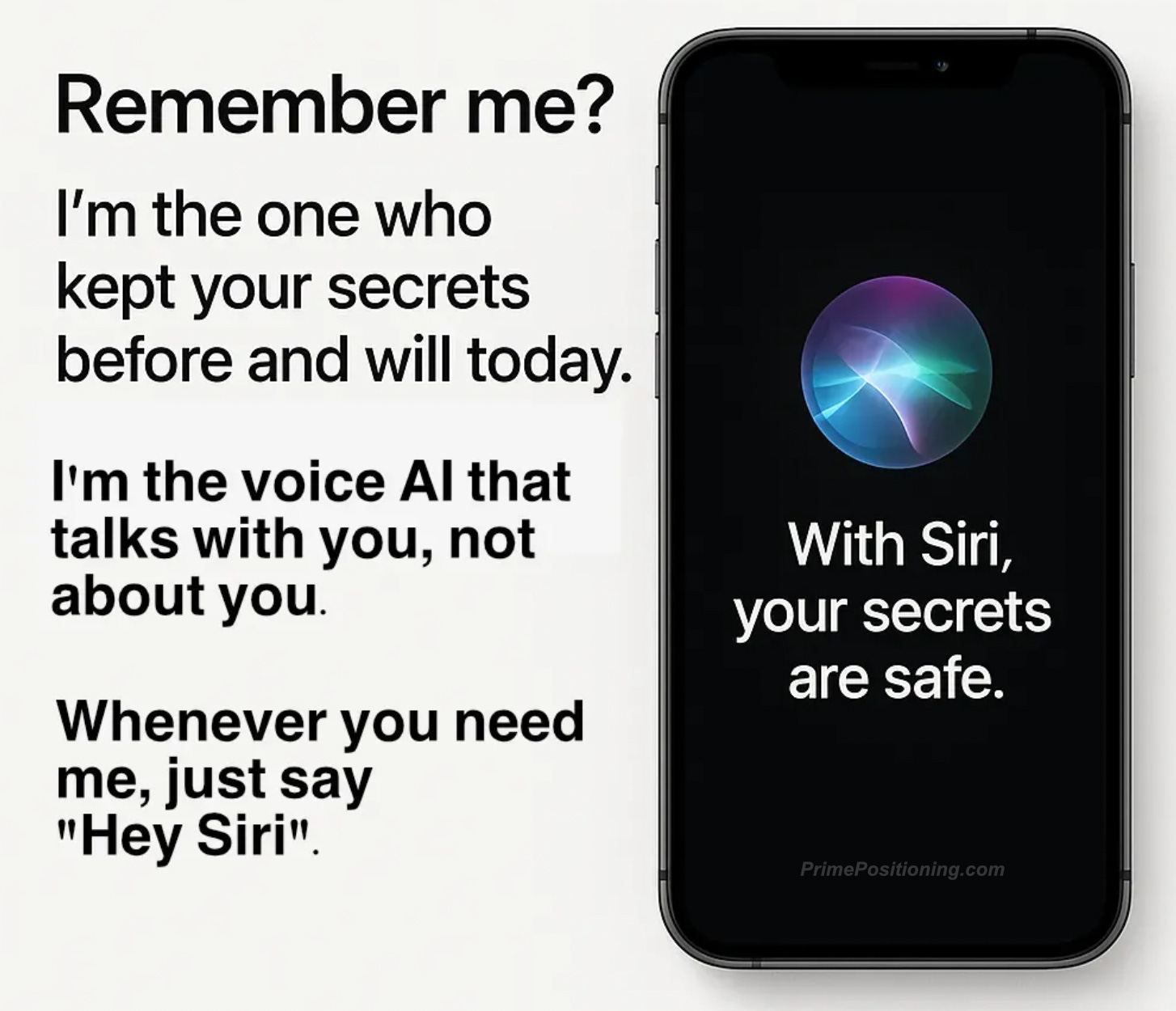
The real cost isn’t the $1 billion annual check to Google. It’s the compound value of clarity they destroyed.
Two years fragmenting what should have been deepening. Development budgets creating separation instead of integration. Marketing budgets teaching confusion instead of trust. And now, a billion-dollar annual payment for capability they once owned.
That $2 billion could have funded Siri 2.0—the upgrade that turned a voice assistant into adaptive, privacy-first intelligence across every device.
The payoff:
Vision Pro launches with its natural guide
Evolution customers understand, not confusion they resent
Privacy moat impossible for competitors to replicate
Capability owned, not rented
Instead, Apple built a new name for what it already had and bought back the intelligence it once led.
Momentum converted into maintenance.
Vision Pro Needed a Guide. Apple Already Had One.
Vision Pro didn’t fail because of hardware. It failed because it launched without its natural guide.
Spatial computing demanded intimacy—trust that what you see, say, and store stays yours. Apple had already built that trust through thirteen years of “Hey Siri.”
The positioning was obvious: “Siri 2.0—Your trusted guide to seeing differently.”
Same voice. Same privacy. New dimension.
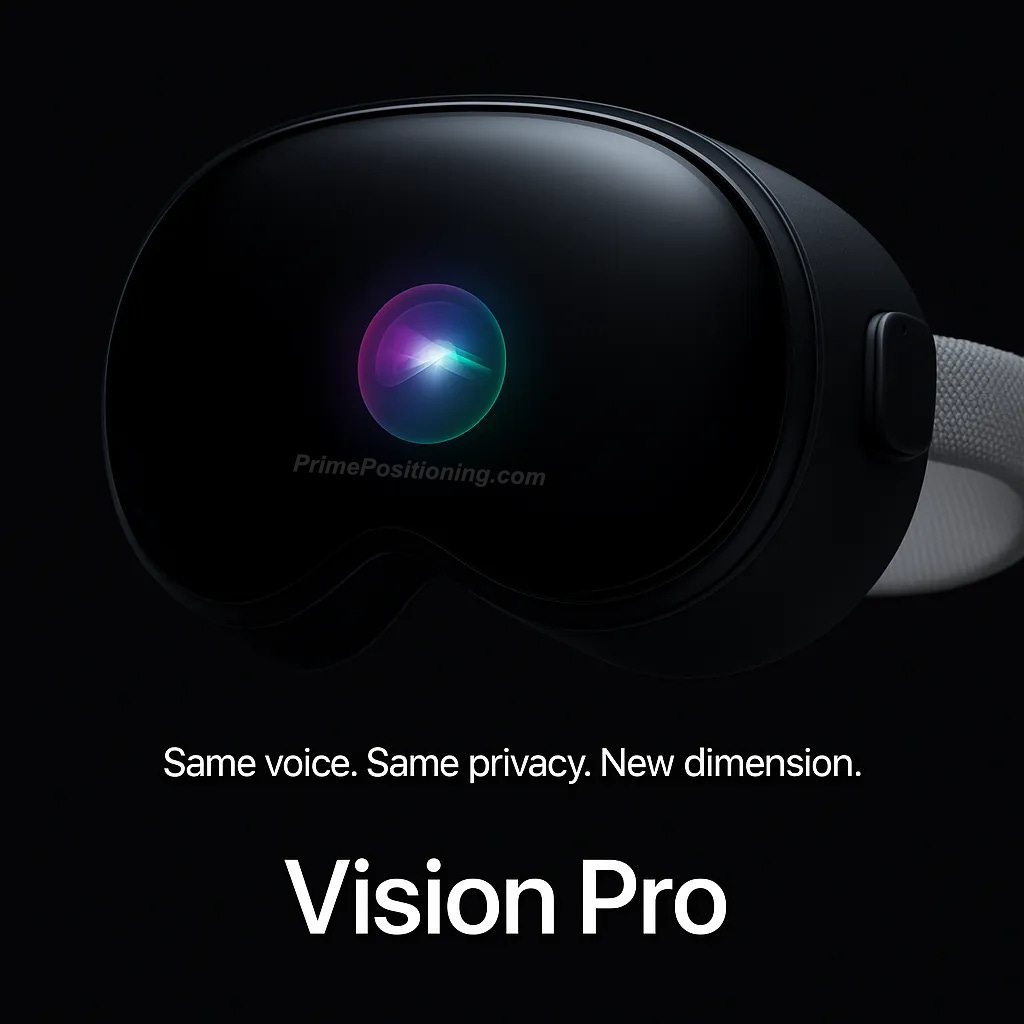
That clarity would have made every learning cycle faster, every marketing message sharper. I’d be writing about Prime Mover momentum instead of panic-speed decisions.
Five Questions Before Your Next Strategic Move
Apple’s $2 billion mistake wasn’t about AI capability. It was about framing.
One wrong frame—”We’re behind in AI”—corrupted every system downstream.
Development built separation instead of integration. Marketing optimized for perception instead of progress. Partnerships created dependency on competitors. All because they defined the wrong problem.
Before your next strategic move, pressure-test five frames:
What problem are we actually solving? Apple asked: “How do we catch up in AI?” The real question: “How do we defend our ecosystem when AI becomes table stakes?” → Are you solving the real problem or the one you’ve imagined?
What advantage do we already own? Thirteen years of Siri trust. On-device privacy. Seamless integration. They left a Prime Mover position to chase borrowed capability. → Are you abandoning strength to copy weakness?
What coordination will this require? “Apple Intelligence” forced every team to learn a new language. Separation replaced synergy. → Does this choice align or fracture motion?
What’s the opportunity cost? Lost: Vision Pro timing, internal capability, strategic independence. Could have built: Siri 2.0 as spatial guide, privacy moat, natural evolution. → What could these same resources build if aimed at the right problem?
Whose game are we playing? Apple chased ChatGPT’s metrics instead of defending their own territory. → Are you measuring success by your conviction or your competitor’s?
Find the Siri you already own.
The advantage sitting in your cabinet while you buy new machines. The trust you’ve earned that you’re about to confuse with clever marketing. The ecosystem you’ve built that competitors are still trying to replicate.
Apple had everything Vision Pro needed: years of customer training, ecosystem integration, privacy trust.
They saw ChatGPT launch—and blinked.
That blink cost them $2 billion and counting.
Frame the right problem—or spend years and billions trying to get back to where you already were.